Unlock Your Brain’s Potential: Transform Learning with Visual and Experiential Methods

Struggling to retain information despite hours of study? You’re not alone. Traditional learning methods, often heavy on text and rote memorization, frequently fall short because they don’t align with how our brains are naturally designed to learn and remember. Discover groundbreaking insights into effective learning strategies that leverage our innate cognitive abilities, transforming your approach to knowledge acquisition and boosting long-term memory retention.

Why Your Brain Prefers Experience Over Pure Text for Learning

Our brains are remarkable biological machines, honed over millennia to thrive on dynamic, sensory-rich experiences, not static text. Early human survival depended on learning through movement, emotion, spatial awareness, and direct interaction with the environment and potential threats. This fundamental evolutionary wiring means that when learning relies solely on abstract text, our capacity for deep understanding and lasting memory retention is significantly diminished. To truly embed information, consider shifting towards experiential learning approaches that engage multiple senses and mimic real-world scenarios, fostering a more natural and effective cognitive process.

Unlock Superior Memory with Dual Coding Theory

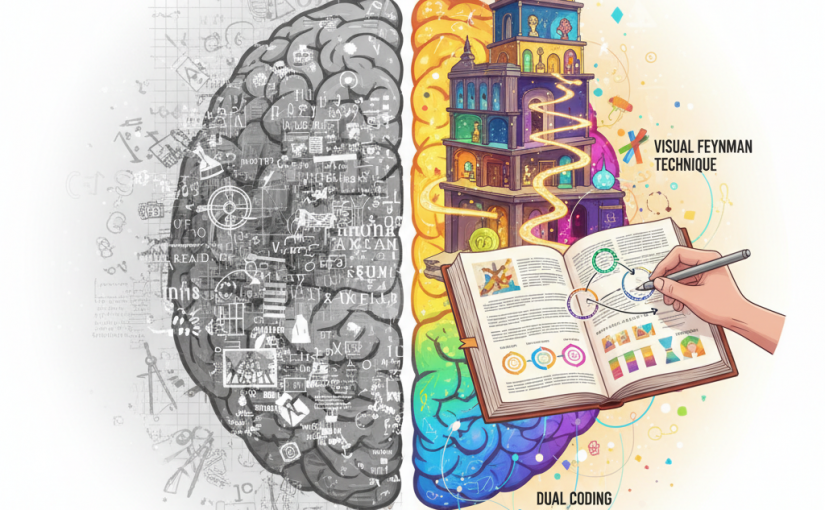
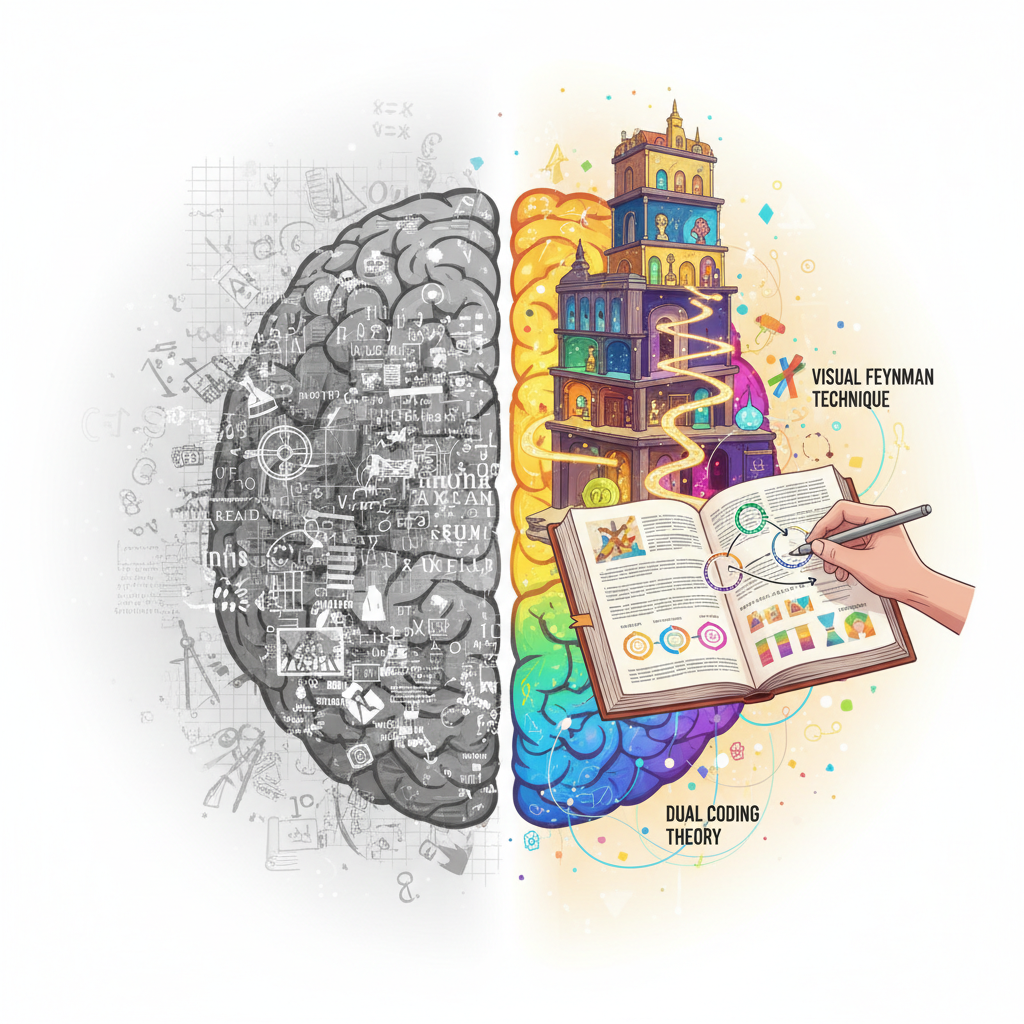
To dramatically enhance memory and comprehension, cognitive science points to the power of dual coding. This effective learning strategy harnesses the brain’s two primary memory channels: the verbal channel for words and the visual channel for images. When you integrate both, such as combining written concepts with relevant diagrams, infographics, or compelling slides, you create a richer, more robust mental representation of the information. This synergistic approach, foundational to multimedia learning, allows for more pathways to recall and significantly outperforms text-only methods for boosting retention and deepening understanding.

Leverage Spatial Memory: The Ancient Secret to Recall

History’s most powerful memory techniques, like the venerable Method of Loci (or “memory palace”), unequivocally demonstrate that human memory is profoundly spatial and visual. Our brains are hardwired to remember locations, scenes, characters, and actions with remarkable precision. By associating abstract information – be it formulas, definitions, or complex ideas – with vivid, imagined spatial environments, you transform inert data into an engaging narrative. This ancient mnemonic device proves that visualising concepts within a familiar mental landscape is far more effective for recall than attempting to memorize isolated facts, tapping into our innate spatial reasoning abilities.

Transform Information for Deeper Learning and Retention

Effective learning transcends mere repetition; its true power lies in the active transformation of information. Rather than passively absorbing content, engage your brain in the dynamic process of converting knowledge into different formats. This could mean translating text into illustrative images, distilling complex ideas into relatable metaphors, or crafting concepts into compelling stories. This active encoding process compels the brain to process information more deeply, forge stronger neural connections, and encode experiences in a way that significantly enhances long-term recall and mastery, moving beyond surface-level comprehension.

Master Concepts with the Visual Feynman Technique and Strategic AI

The Visual Feynman Technique stands as a cornerstone for true understanding. This powerful method encourages learners to simply draw an idea or concept to prove their comprehension, forcing a simplification and visualization that reveals gaps in knowledge. While crucial for active encoding, artificial intelligence can serve as a powerful support tool. AI can generate helpful metaphors, provide alternative explanations, or test your understanding after you’ve engaged in the initial visualization and explanation process. However, it’s vital that AI does not replace the active cognitive work, as this would bypass the very encoding process essential for memory development. Additionally, ensuring adequate sleep remains paramount for the consolidation of these visually-rich memories, solidifying learning gains.
别再给孩子报这些班了!谷歌前高管深更警告:AI正在让你的“鸡娃”成果化为乌有!

各位海淀、黄庄、强基计划的家长们,醒醒吧!

如果你还沉溺于让孩子刷题、练考级、写那些AI一秒钟能写一百篇的格式化作文,你可能正在亲手把孩子送入“毕业即失业”的深渊。

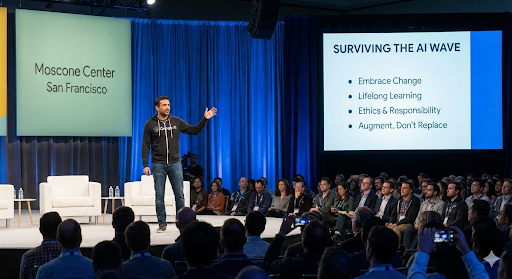
近日,谷歌 [X] 前首席商务官 Mo Gawdat 的一段内部分享在教育圈炸了锅。他直言不讳地指出:在这个AI推倒重来的时代,99%的家长都在错误的赛道上疯狂内卷。

如果你不想让孩子在20岁时被AI“降维打击”,请务必看完这四条“保命建议”:


1. 传统的“技能培训”已经死了!

“别再让孩子用AI搜菜谱、写邮件了,那是对顶级大脑的侮辱!”

很多家长还在沾沾自喜于孩子会用AI写作业。Mo Gawdat 警告:这是极其平庸的用法。

  • 焦虑真相: AI不是工具,它是人类智力的“终极外挂”。
  • 家长该鸡什么: 别鸡“结果”,要鸡**“深度搜索(Deep Searches)”**的能力。如果你的孩子不会利用AI去挖掘知识的底层逻辑,不会通过AI进行跨学科学习,那么他在AI面前就是一个“透明的废人”。
  • 一句话点醒: 未来的竞争,不是知识储备量的竞争,而是**“获取顶级知识之技能”**的竞争。

2. 情商与人际链接:未来的“奢侈品”

“最好的程序员、最好的艺术家都将是机器,但顶级的人类表演者永远是人。”

你还在逼孩子练那些机械的乐器考级吗?你还在让孩子为了分数放弃社交吗?

  • 残酷预判: 技能型工作将被AI全面接管。未来最贵、最稀缺的,是**“人与人之间深度的情感纽带”**。
  • 鸡娃新方向: 那些能够建立深层关系、拥有极致共情力、能站在舞台上触动人心的人,才是未来的“人上人”。
  • 敲黑板: 如果你的孩子被培养成了一个只会考试的“小机器”,他将永远竞争不过真正的机器。

3. 伦理与价值观:孩子最后的“护城河”

“我们的决策不是基于智能,而是基于伦理。”

AI学得很快,它在学习人类的逻辑,更在学习人类的阴暗。

  • 家长最容易忽视的: 大家都忙着补习数理化,谁在教孩子伦理?
  • 危机感: 未来世界是由AI运行的,而AI的逻辑取决于我们喂给它的伦理。如果你的孩子没有强大的道德底线和伦理架构,他不仅无法驾驭AI,反而会被AI异化。
  • 鸡娃核心: **伦理观(Ethics)**不是虚无缥缈的口号,它是AI时代孩子最高级的“操作系统”。

4. 辩证思考:别让你的孩子成为“算法的奴隶”

“从70年代起媒体就在操纵大脑,AI让这种谎言的力量增强了10倍。”

现在的孩子刷着短视频长大,大脑正在被算法无情收割。

  • 真相的丧失: Mo Gawdat 警告,主流媒体和社交媒体上几乎没有真相。
  • 必杀技: 训练孩子**“质疑一切(Debate Everything)”**。
  • 高端操作: 教孩子用AI去反向拆解谎言——“这段话的逻辑漏洞在哪里?”“背后隐藏了什么立场?”“缺失了哪部分真相?”
  • 目标: 只有具备这种独立思辨力的孩子,才能在谎言满天飞的未来,保持清醒的头脑。

💡 结语:

各位家长,AI时代的内卷,早已不是体力的赛跑,而是认知深度的博弈。

当你还在为孩子少考了几分而焦虑时,时代的列车已经换轨了。别让你的孩子,成为最后一代“旧人类”。

现在改变,还来得及。


你认为在AI时代,哪种能力才是孩子最迫切需要的?是编程还是哲学?欢迎在评论区分享你的看法,我们一起抱团取暖,拒绝盲目内卷!

Former Google Exec Warns: 4 Crucial Shifts That Will Define Your Future Value in the AI Era

In a world where AI is becoming ubiquitous, will you be swept away by the tide or ride its crest?

Mo Gawdat, the former Chief Business Officer of Google [X] and a renowned thinker, recently shared four provocative pieces of advice. He argues that the arrival of AI isn’t just a simple technical upgrade—it is a fundamental redefinition of what it means to be “human.”

If you’re still using AI just to find recipes or write template emails, you’re missing the core of this revolution. Here are Mo Gawdat’s four rules for survival and success in the future:

1. Stop “Stupid” Usage—Unlock Deep Intelligence

“AI is the ultimate tool of intelligence; don’t use it as a mediocre assistant.”

Most people ask AI things like, “Help me write a sick-leave note” or “What should I have for dinner?” Mo Gawdat points out that this is a waste of a world-changing tool.

• The Real Power: Use it for Deep Searches.

• The How: Use AI to dig into the underlying logic of knowledge, solve complex cross-disciplinary problems, and expand the boundaries of your own brain.

• The Core Logic: Whoever masters the skill of knowledge acquisition will be miles ahead of the average person in terms of cognitive depth.

2. Human Connection: Your Final “Unfair Advantage”

“The best artists might be machines, but the best life performers will always be humans.”

When AI can perform 99% of skill-based tasks, the only thing that cannot be replicated is deep human resonance.

• The High-Value Roles of the Future: It won’t be the person who writes the best code, but the salesperson who builds deep, trusting relationships, or the performer on stage who touches the soul.

• The Reminder: Don’t forget the connection we felt when we met face-to-face years ago. In the AI era, social intelligence, empathy, and authenticity will become your most expensive luxuries.

3. Ethics: The AI “Emergency Brake”

“Our decisions are not made through our intelligence; they are made through our ethics.”

AI is a mirror. It is learning our language and logic, but more importantly, it is learning our values.

• The Danger: If we as a society lose our moral compass, the AI “fed” by our behavior will become extremely dangerous.

• Our Responsibility: We must teach ourselves and the next generation Ethics. Since AI will soon manage the world’s operational logic, that logic will be a direct reflection of our ethical choices.

4. Find the Truth in a Forest of Lies

“In a world manipulated by media and algorithms, nothing you are told is absolutely true.”

Since the 1970s, the media has been a machine for mind manipulation. Now, powered by AI, this manipulation is ten times more potent.

• The Survival Skill: Debate Everything. * The Counter-Intuitive Use for AI: When you hear a popular opinion, take it to an AI and ask: “What is wrong with this? Are there any lies here? Is there an alternative view that is missing?”

• The Goal: Use the vast knowledge of AI to break out of your information cocoon and stay “awake.”

💡 Final Thoughts

AI will not replace you. However, a person who uses AI for deep thinking, possesses extreme empathy, and stands firm in their ethics will certainly replace those who stand still.

The future belongs to those who dare to question the “truth” and those who know how to connect with the human heart. Are you ready?